What Are Keywords and Search Intent in SEO?
Keywords and search intent are two important parts of search engine optimisation (SEO). They help you understand what people search for on Google and what kind of content they want to find.

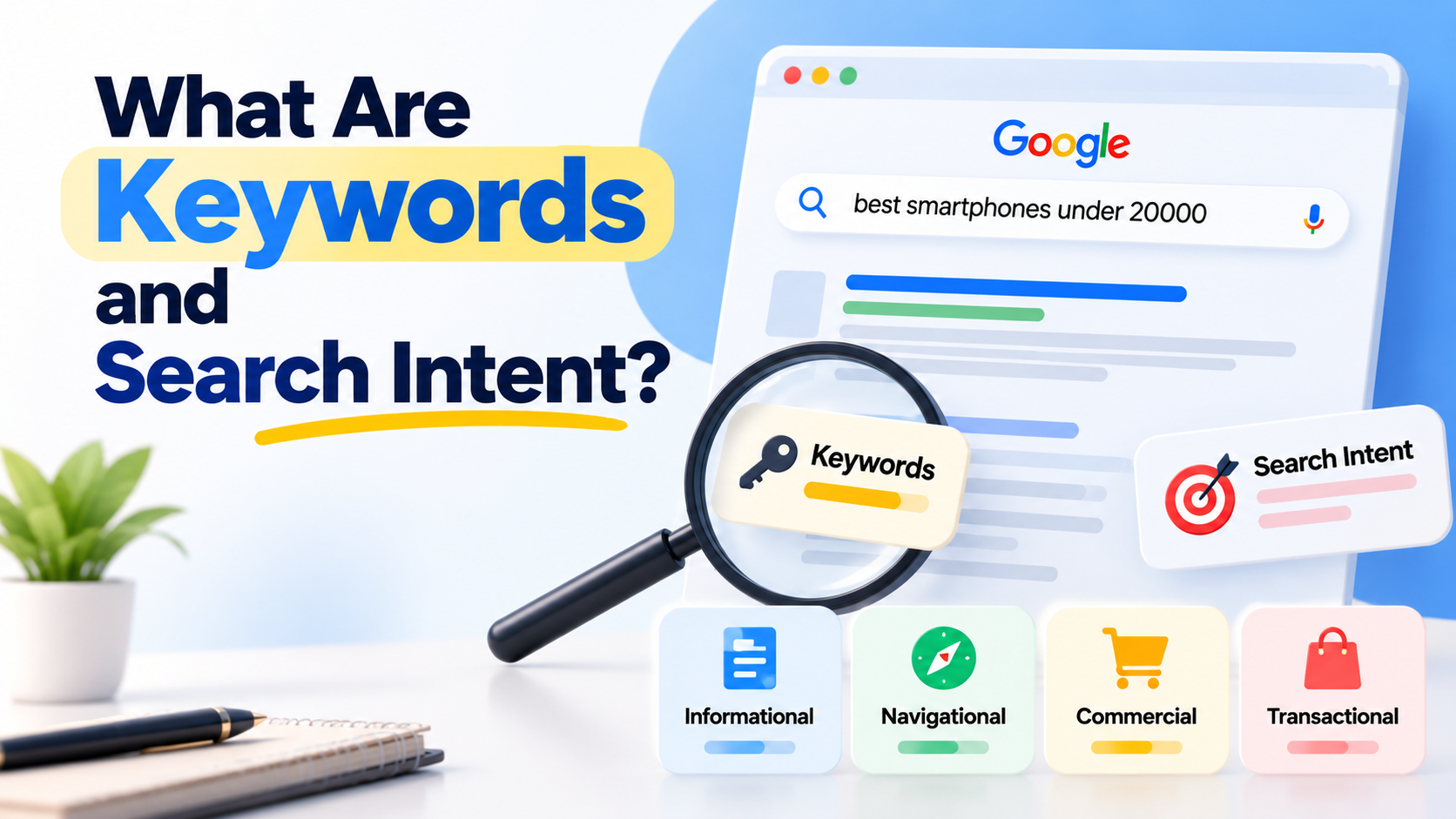
If you want your website to appear in search results, you need to choose the right keywords and create content that matches what people are looking for.
What Are Keywords?
Keywords are the words or phrases people type into search engines when they want to find information, products or services.
For example, someone might search for:
- Best smartphones under ₹20,000
- How to start a blog
- SEO tips for beginners
- iPhone 17 price in India
These are all examples of keywords.
If you run a website about technology, you can write articles around these topics to help people find your website through Google.
Types of Keywords
Keywords can be divided into different types based on their length and purpose.
1. Short-tail keywords
These are short search phrases, usually containing one or two words.
Examples:
- Smartphones
- Digital marketing
- Weight loss
Short-tail keywords often have high search volume, but they can be difficult to rank for because many websites cover these topics.
2. Long-tail keywords
These are more specific search phrases, often containing three or more words.
Examples:
- Best smartphones under ₹20,000
- How to start a blog for beginners
- Best free SEO tools for small websites
Long-tail keywords usually have a clearer purpose. They may have less competition, although this depends on the topic.
3. Informational keywords
People use these keywords when they want to learn something.
Examples:
- What is SEO?
- How does Google Search work?
- How to write an article
4. Transactional keywords
People use these keywords when they are ready to buy something or take a specific action.
Examples:
- Buy iPhone 17 online
- Purchase SEO software
- Book a hotel in Jaipur
Understanding these types can help you decide what kind of content to create.
What Is Search Intent?
Search intent means the reason behind a person's search.
In simple words, it explains what someone wants to find when they type a query into Google.
For example, a person searching for "what is SEO" wants an explanation. Someone searching for "best SEO tools" probably wants to compare different tools.
Although both searches are related to SEO, the person expects different information from each one.
The Four Main Types of Search Intent
1. Informational intent
The person wants to learn something or find an answer to a question.
Examples:
- What is search engine optimisation?
- How to improve website speed
- Why is my website not ranking?
The best content for these searches usually includes explanations, guides, tutorials or answers to common questions.
2. Navigational intent
The person wants to visit a particular website or page.
Examples:
- Facebook login
- Google Search Console
- Amazon India
These users already have a specific website or service in mind.
3. Commercial investigation
The person is researching different options before making a decision.
Examples:
- Best laptops for students
- Rank Math vs Yoast SEO
- Best web hosting for WordPress
Comparison articles, reviews and detailed product guides can be useful for these searches.
4. Transactional intent
The person wants to buy something, subscribe to a service or complete another action.
Examples:
- Buy a laptop online
- Purchase WordPress hosting
- Sign up for an SEO tool
Product pages, pricing pages and service pages often match this intent.
What Is the Difference Between Keywords and Search Intent?
Keywords tell you what a person searches for. Search intent tells you what that person wants to achieve.
For example, consider these three searches:
| KeywordSearch intentSuitable content | ||
| What is SEO? | Informational | Beginner's guide |
| Best SEO tools | Commercial investigation | Comparison article |
| Buy SEO software | Transactional | Product or pricing page |
The topic may be similar, but the content needs to match the user's goal.
How to Find the Right Keywords and Search Intent
Follow these steps before writing an article.
Step 1: Choose a topic
Start with a topic related to your website.
For example, if you run a technology website, you could choose smartphones.
Step 2: Find relevant keywords
Use tools such as Google Keyword Planner, Google Search Console or Ahrefs to find search phrases related to your topic.
Look at search volume, competition and how closely each keyword matches your website.
Step 3: Check what Google shows
Search for your target keyword on Google and examine the top results.
Are they tutorials, product pages, news articles, comparison guides or something else?
The results can give you clues about what searchers expect. They are not a guarantee, but they are a useful starting point.
Step 4: Create the right type of content
If the search results mostly show beginner's guides, publishing a sales page may not be the best choice.
Create content that answers the query clearly and gives readers the information they need.
Step 5: Check your results
After publishing, use Google Search Console to see which queries bring impressions and clicks to your page.
You can use this information to improve your content and find related topics worth covering.
Final Thoughts
Keywords and search intent work together in SEO. Keywords help you understand what people search for, while search intent helps you understand what kind of answer they expect.
Before writing an article, do not focus only on search volume. Check what the searcher wants and whether your content can satisfy that need.
A page that matches the topic but fails to answer the user's actual question may struggle to perform well in search results.
Spotted an error? Read our Editorial Policy or contact us.